





Overcoming BIMtimidation: Belgian General Contracting Firm MBG Makes the Leap to BIM
While Architecture, Engineering and Construction (AEC) professionals are rarely given proper credit for being innovative, the tech sector of the industry has grown so exponentially over the past decade that many new digital possibilities have emerged that can be overwhelming. This is especially true for small to midsize companies within AEC. The technological boom yields incredible advantages when implemented correctly, but that very implementation process raises so many questions that it can become a daunting predicament.
With the increase in Public-Private Partnerships (PPP), the impending UK BIM mandate, Brexit ramifications, and possible government standardizations, the choice of whether or not to use digital solutions is gradually being taken out of the hands of prime contractors on a global scale. Owners and government agencies are instead making the call, indicating that digital solutions are likely here to stay—but just how deep these digital solutions need to go remains to be seen. Project partners are seeing the benefits from increased communications efforts because of technology, and as the tide of BIM and Virtual Design and Construction keeps rising, getting pushed into the water might just be the best way for firms to learn how to swim.
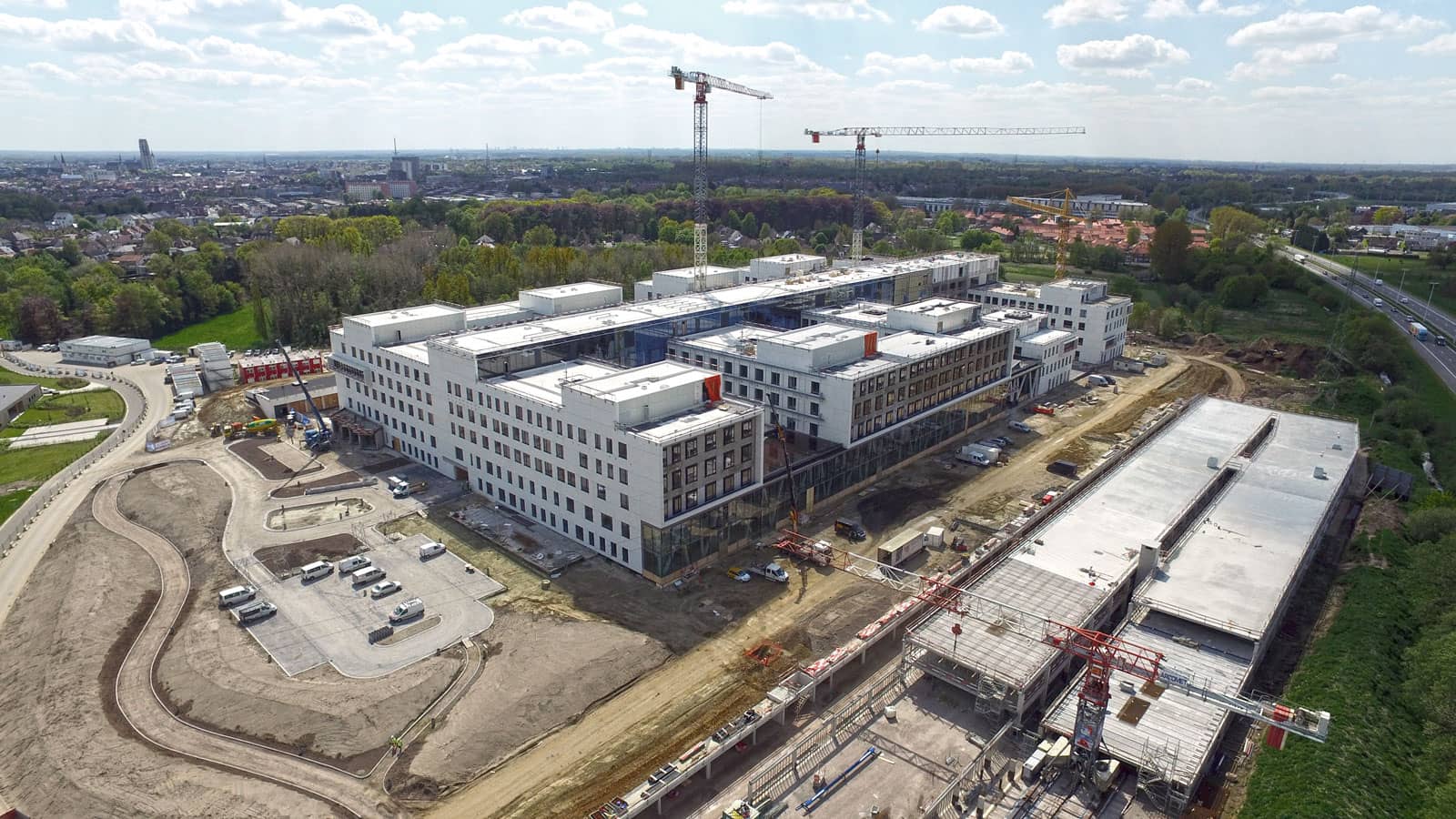
Belgian firm MBG is doing just that, taking the BIM plunge for the first time on the Belgian Industrial CFE affiliate’s £105 million AZ Sint-Maarten Hospital project in Mechelen — hardly the ideal project on which to experiment. The public and privately funded nature of the project left the firm little room to negotiate on technology solutions. (This is not a full PPP project, but financially, private partners VZW Emmaus–AZ Sint-Maarten need to follow rules applicable to government instances because they benefit from the project’s subsidies.) “Our client made the decision to design this hospital in BIM,” says Project Manager Bens Bervoets. As the general contractor for the project, MBG was more than willing to adapt to the digital challenges head-on. “This is one of the first big projects here in Belgian being done in BIM format, with Revit creating a 3D model.
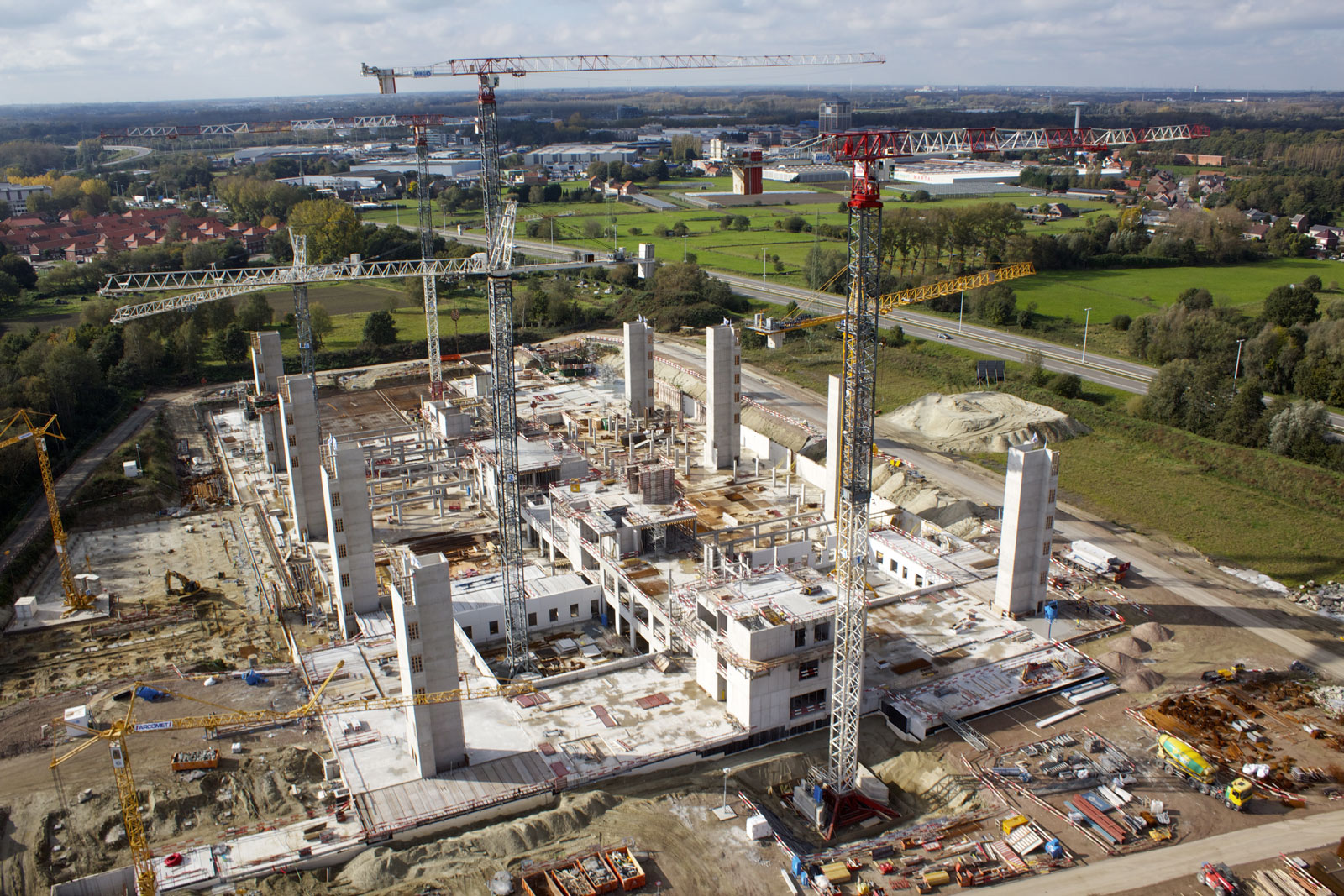
With a five-year build plan totaling nearly £304 million for the finished hospital, the wide-open possibilities of how technology would be implemented on such a grandiose project was the first obstacle to tackle. “We don’t have a standard here in Belgian yet for how to work with BIM—they are currently working on a European standard, but they haven’t finalized it,” says Bens. “For projects like this, there is a mountain of project information that has to be transferred to the right people at the right time. Modern technology can provide solutions for everyone to make their job more efficient.” In this case, the technology suite included Buzzsaw (project extranet), Aproplan, Revit, Tekla, Navisworks and Bluebeam Revu—all of which were new to MBG.
“I believe this software should be used like Word and Excel. I use Bluebeam every day!”
Bens Bervoets
Not Lost In Translation
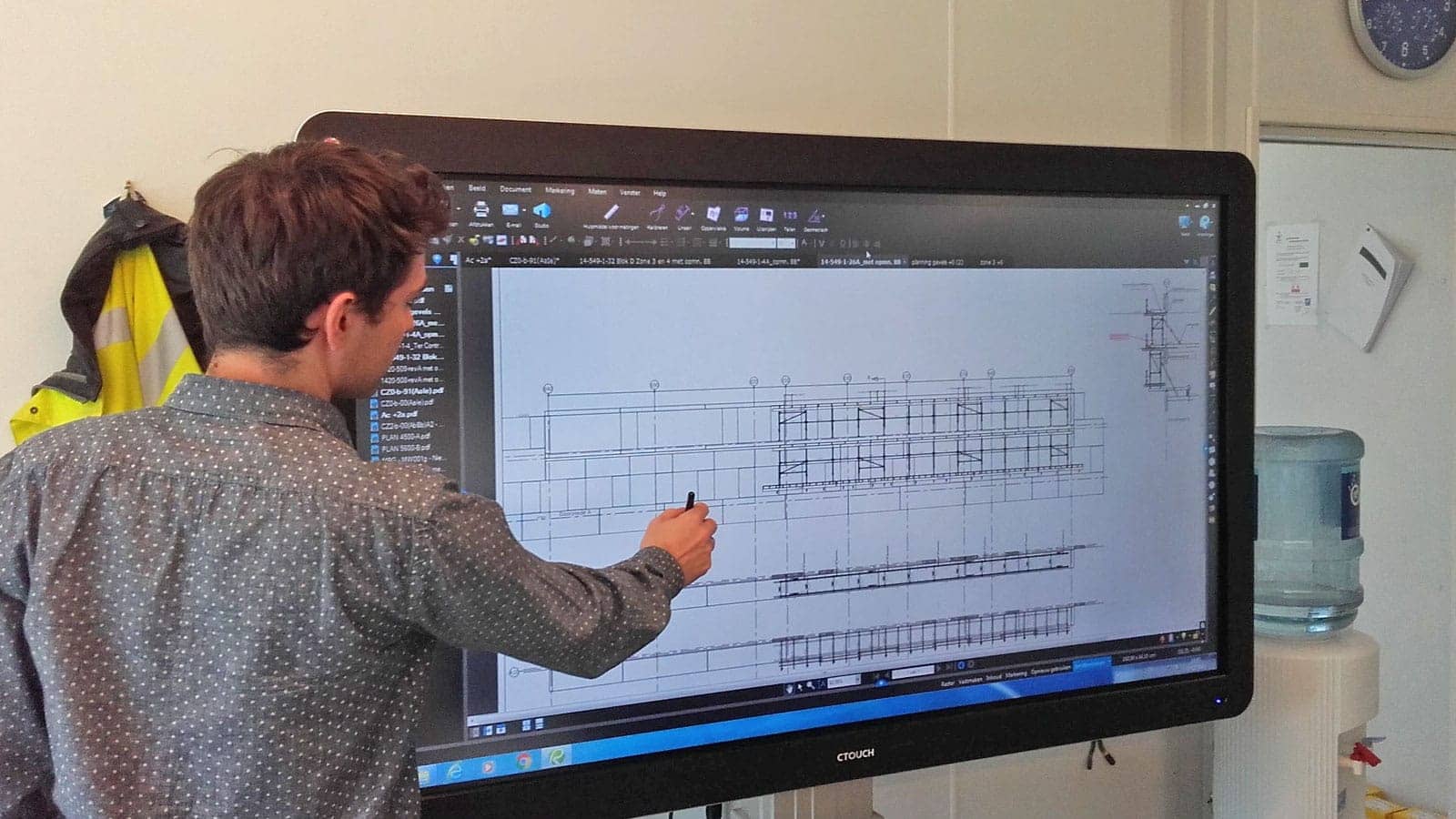
As a project manager, Bens’ key challenges include ensuring the information from the complex BIM programs could be properly translated and sent to the field, as well as gaining project partner approval for all updated drawings. “Normally we would get some drawings from our contractors and subcontractors and we’d have to review them, which would require me to print the drawing and make all my remarks the old school way, on a table with all my drawings as colors,” explains Bens. “And then I’d have to go to our offices in Antwerp and scan them in A0 size. This is not a very complicated process, but it takes a lot of time.” Instead, Bens used Revu to translate the informational drawings and host the markups. “Now with Revu, I can make all my markups in the program digitally, send them to the subcontractors and suppliers, and they can easily send me their revisions in a PDF. We primarily use the annotations, hyperlinking and measurement tools. It’s a good program because not every contractor, and definitely not every subcontractor or smaller player on the project, has the BIM software or the right staff to work with it. So, especially with smaller subcontractors, we use Revu.”
If You Can Show It, They’ll Know It
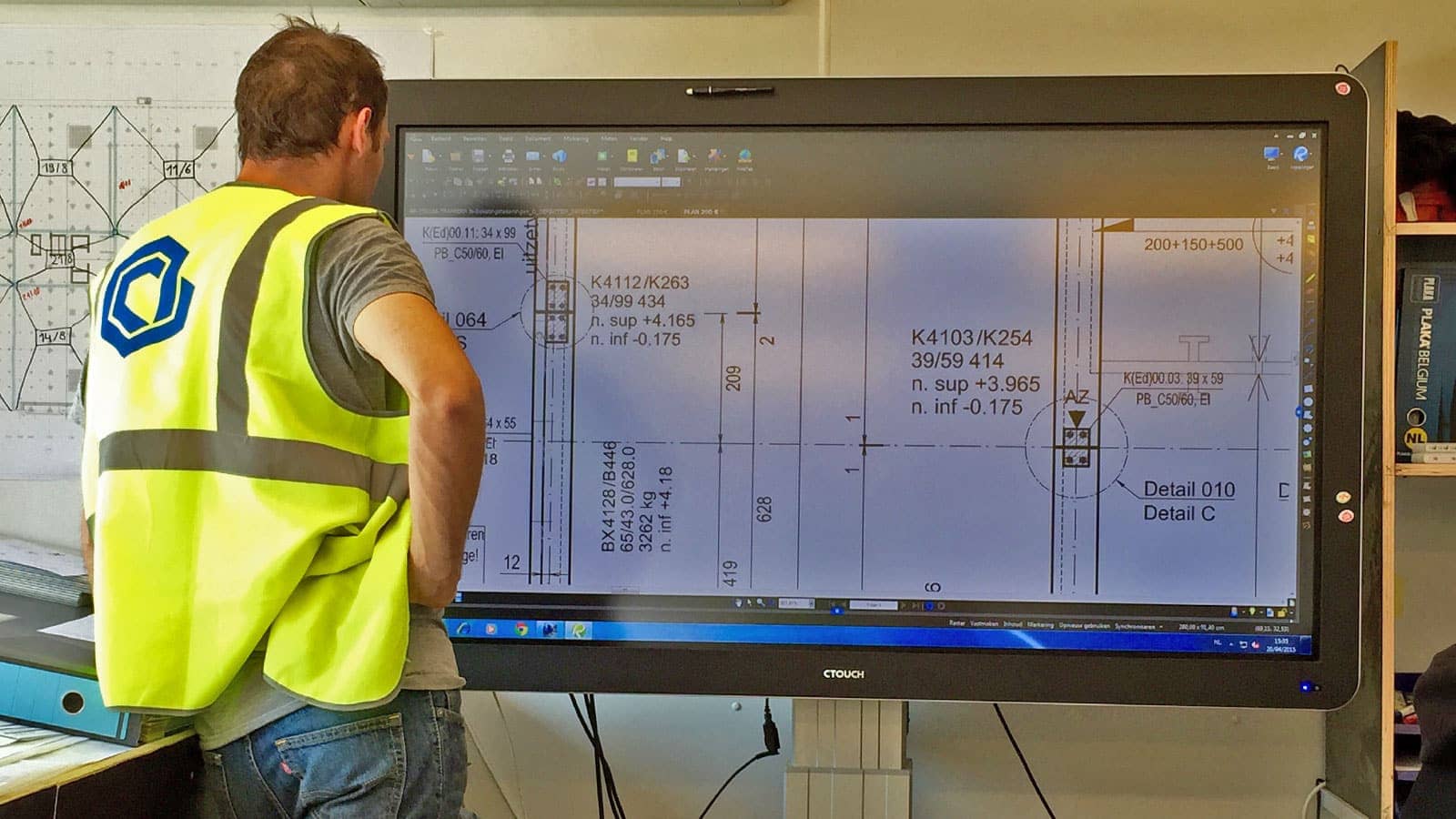
The other component that eased MBG’s transition to BIM was the very device that showed the drawings. “We are using a big touch screen because it can show an A0-size drawing without zooming,” Bens declares. “That makes it an easier adjustment for workers who are used to checking drawings on the plotter paper.” Not only did MBG save money and time by not needing to print on plotter paper, but also project latency was practically eliminated between drawing approval and posting on the touch screen. Bens elaborates, “We use the screen for meetings with the foremen of subcontractors so that our site superintendents can easily discuss short-term planning, because you can take a floor map of, for example, level 2 of the building, and you can easily mark it up using Revu on the big screen. You can easily make markups with colors, and then we can save it on the project extranet [making it possible to carry the documents along on site using an iPad] or send it to them via email.”
On Track and Moving Ahead
Despite using BIM for the first time, MBG’s AZ Sint-Maarten Hospital project is moving full steam ahead and, more importantly, is right on schedule. Bens and his MBG team are happy to have taken on the challenge. “For this project, there were a lot of test cases coming together. We had the screen, and BIM and Bluebeam Revu, and I think these will become standard practices on our future jobs.”
Bens attributes information-sharing as the key to unlocking BIM’s potential within the built environment. He also believes that the industry as whole would benefit from better communication. “We are living in a sharing economy now, especially because of social networks, and we’re in a sharing time in general. We are seeing this evolution in the construction industry in Belgian, and in the rest of Europe as well. A lot of discussions are happening between different companies, so I think the competition is more based on knowledge than on labor. Thirty or forty years ago, you were a top five contractor if you had 1,000-plus workers, and now you are a top ten contractor if you write the best solutions for your client. So there has been a shift in the construction industry from labor to knowledge-based competition.”
*MBG is located in Belgium and purchased Bluebeam products through Bluefields, a Bluebeam Silver Reseller.