




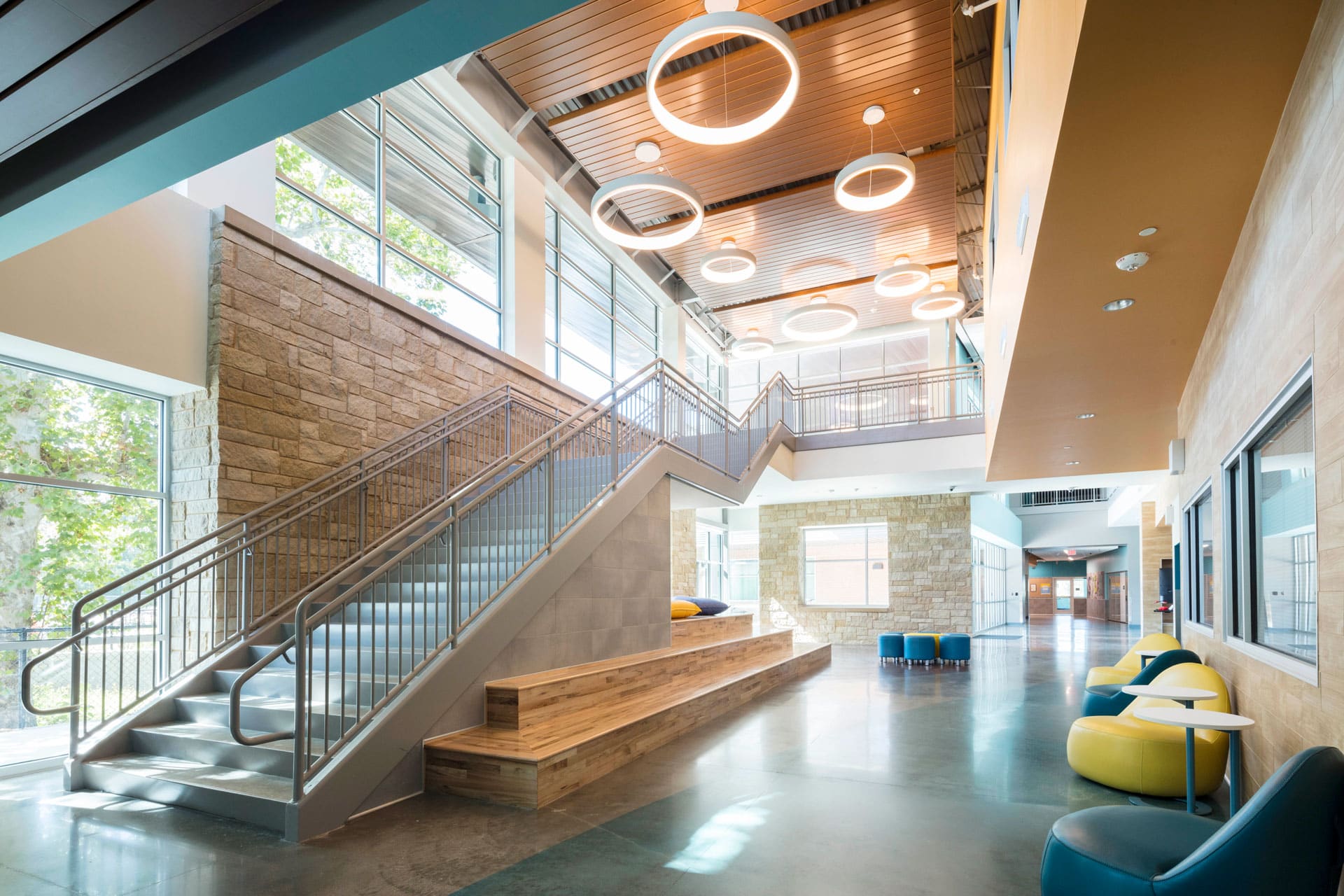
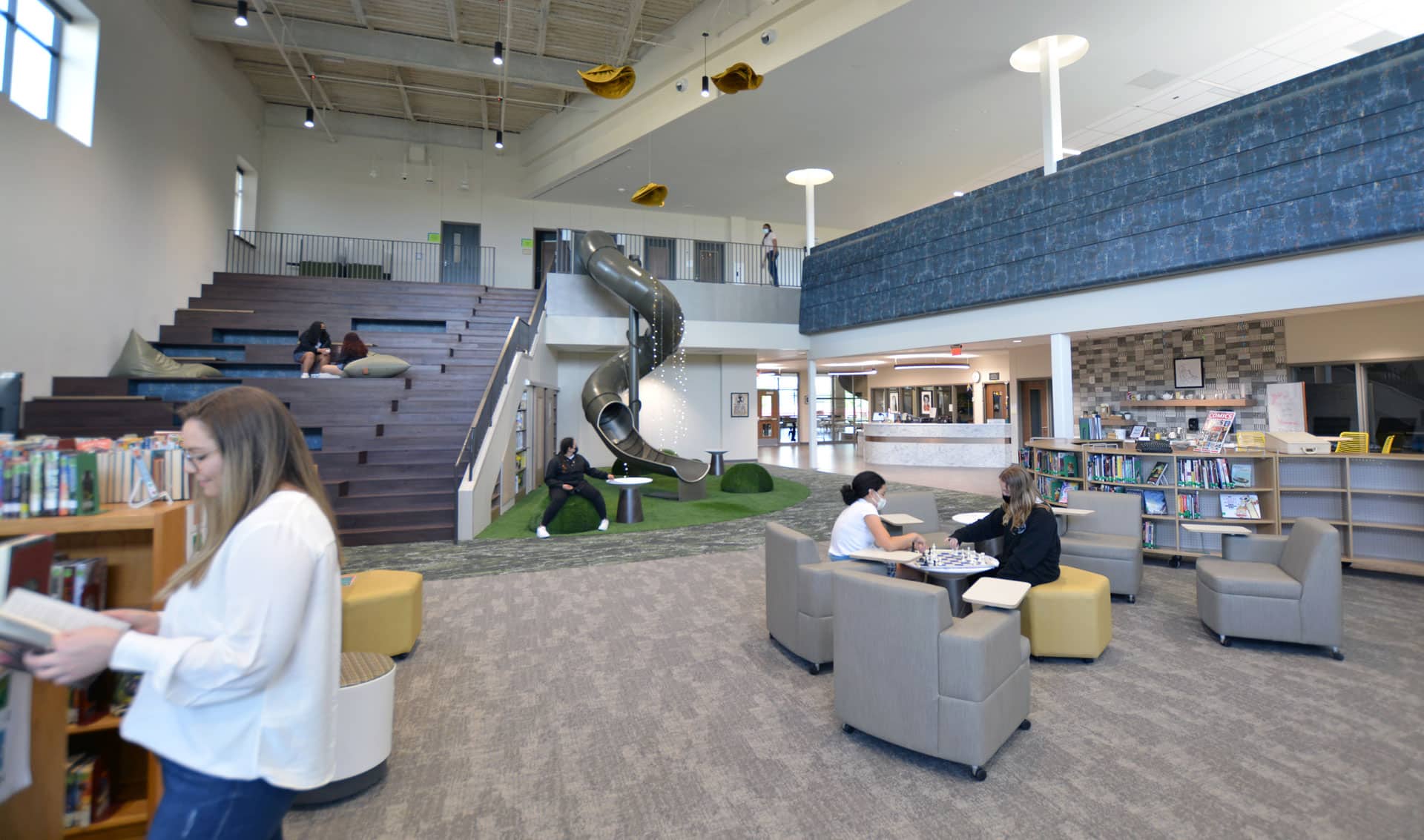
In November 2017, the citizens of Austin, Texas, approved an ambitious, $1 billion bond program, which included building and modernizing 20 local Austin Independent School District facilities. The plan was ambitious not just due to its dollar amount or building volume. The bond program was planned to be completed on a tight, five-year timeline, which would require several alternative construction delivery methods, including design-build, design-bid-build and construction manager at-risk.
Most of the projects (18) were led by AECOM, which orchestrated nearly every element of each project’s delivery, from design to pre-construction, construction and closeout. All told, the endeavor would entail 1.75 million gross square feet of new construction, 230,000 gross square feet of renovation and 590,000 gross square feet of demolition.
What’s more, all of the facilities would have their own unique design. “If you go from one elementary school that was delivered in the bond program to another, they do not look the same at all,” said Chelsea Burkett, a design and quality manager with AECOM who worked on the bond program.
An additional goal was for all the buildings to be as environmentally sustainable as possible—each were contractually required to have a minimum of LEED Silver and AEGB (Austin Energy Green Building) two-star rating.
A program of this scale, with a myriad of stakeholders and the sky-high expectations of public fundraising, in addition to its tight timeline, put immense pressure on AECOM. The firm would have to find a way to coordinate and manage communication, cost management and quality control, among other critical project management elements, in the most efficient way possible to meet the program’s ambition.

Streamlined communication
Paramount to the bond program’s success would initially be its design review process. “We wanted to make sure our design review process facilitated collaboration with ease across multiple stakeholders,” Burkett said. “We wanted to create clear and consistent standards across all project teams, which each included different collaborators, technical reviewers and project management teams.”
“We wanted to ensure consistency and keep design teams accountable—that the commitments they made to the comments left in the technical review process were truly implemented in future design deliverables,” Burkett continued. “And we wanted to capture comments across the lifespan of a project.”
“Bluebeam was a really incredible tool. It’s a great space for everybody involved to make their comments, give their thoughts.”
Bianca Medina-Leal
Deputy Program Director
AECOM
At first, the team tried using a Microsoft Excel spreadsheet to meet these strict design review requirements. “That was very onerous, not efficient and very challenging to use,” Burkett said.
Burkett had never heard of Bluebeam when a colleague mentioned that the construction technology company was holding its annual user conference in Austin in 2018—just as AECOM was beginning to embark on the design review process.
“We went to the Bluebeam conference with a bunch of questions, had watched videos before it and realized that this was the saving grace of exactly what we wanted,” Burkett said. “And from there we started to build the design review process, and its eventual success, in Bluebeam.”
Burkett said a major advantage of using Bluebeam was the software’s ability to customize the comments during design review. “Sometimes the deliverable would have thousands of comments in it,” she said. “We created customized Tool Chests that had Markup tools within it that all had customized subjects.”
“The other level of customization that we did to meet our goals was customized statuses within the markup tables,” Burkett added. “We really wanted to understand: comments are left, responses are given, now what? Are the comments going to be incorporated? Are there meetings needed to resolve this issue?”
This customization made it easier for the more than 400 project collaborators to search and respond to the more than 100,000 comments posted during the design review process. Using more than 145 Studio Sessions, Bluebeam’s real-time markup and collaboration capability, throughout the project, the AECOM team was able to efficiently manage critical communication, reducing risk of errors and minimizing potential re-work.
Moreover, Studio Sessions’ ability to streamline and organize design review collaboration efficiently played a significant role in helping the overall bond program project meet its ambitious timeline.
“To have the ability to pull up a Bluebeam Studio Session in a meeting with the owner and search based off of these statuses and be able to quickly go to every single one that needs their input, provide responses and then formally close out those comments, was truly incredible,” Burkett said.
Simplified workflows
The second major use of Bluebeam on the project came in the form of cost and contract reviews, again using Studio Sessions. In all, the project would require more than 100 cost estimate reviews and 45 contract amendment reviews, for a total cost of $586 million.
The team didn’t initially intend to use Bluebeam for cost management. “We had great feedback and instantly saw such great efficiency that we quickly began to look into how we could apply Bluebeam to this process.” said Bianca Medina-Leal, a deputy program director at AECOM. “How can we leverage Bluebeam for budget and cost management?”
Medina-Leal said that the AECOM team used a similar Studio Sessions workflow as it did for design review for cost estimate reviews. “As you can imagine, with 18-plus projects going as fast as they were, each design deliverable contractually, the general contractor owed an estimate in response to that design deliverable,” Medina-Leal said. “Every time a design development deliverable would come in, we received the estimate from the contractor and a Bluebeam Studio Session would be created to review the estimate.”
The two main project delivery methods, Construction Manager At-Risk and Design-Build, each use guaranteed maximum price (GMP) amendments as a mechanism to finalize construction costs and schedule before building began, Medina-Leal said. The team used Studio Sessions to get all cost management stakeholders to agree to the GMP after a series of estimate reviews and iterations.
“As a project team and as an owner, you’re getting to the point of essentially calling the budget and that can be a really big deal,” Medina-Leal said. “You’re making an amendment to the contract; it includes clarifications and assumptions. A Bluebeam Studio Session would be created that included that GMP cost estimate as well as all the required backup documentation, like the clarifications and assumptions and schedule.”
“Bluebeam was a really incredible tool,” Medina-Leal added. “It’s a great space for everybody involved to make their comments, give their thoughts.”
Studio Sessions’ real-time, ongoing capability, which allows collaborators to participate in a continuous stream of communication over a given document, also helped AECOM conduct value analysis during the project when certain aspects were at risk of running over budget.
“All conversation is within the file,” Medina-Leal said. “It’s a great space to archive or to reference when you’re reviewing the next iteration of estimates. You can always go back and pull information or get new team members up to speed.”
Studio Sessions had been such a successful tool by this point that the AECOM team kept wanting to expand its use of Bluebeam on the project. Enter Studio Projects, Bluebeam’s file storage and sharing capability, which was used for pay applications, contract change orders and internal change orders.
“Each project would have its own Bluebeam [Studio] Project,” Medina-Leal said, “and within that Bluebeam Project you can create a folder structure. Each [Studio] Project was set up the same way with the same folder structure and was a place where you could follow the lifecycle of a potential change order until it became an approved and executed internal change order or contract change order.”
Ensuring consistency, quality control
Finally, during the construction of each of the 18 facilities, the AECOM team turned to Bluebeam again, this time to ensure consistency and building quality control. Bluebeam came in handy especially when it came to contractor scheduling review.
Each contractor owed a monthly schedule as the project progressed. One Studio Session included all the schedules, which would allow different schedule stakeholders to review and make comments for the contractor to review. “Now we have record for each submission that the following notes were expected to be updated,” Medina-Leal said.
Taken together, Bluebeam’s ability to streamline project communication and collaboration during critical construction phases allowed the AECOM team to successfully close out many of the facilities.
“Bluebeam was that key component that allowed us to do this on such a large scale across so many different projects that were all ongoing at the exact same time,” Burkett said. “It allowed us to do our scope, budget and schedule validations at the beginning and then have the cyclical validation that would happen throughout the entire project cycle.”
AECOM’s use of Bluebeam to complete the 2017 bond program with such success encouraged the school district to call for another bond program in 2022—this one at $2.4 billion—to modernize more schools in a similar timeframe. It passed with more than 70% approval, and AECOM was hired again to lead it, with Bluebeam in hand.
“There are a lot of components and tools within Bluebeam that are new that our team has been studying and thinking about how to leverage,” Medina-Leal said, “thinking about how we can make this an even better experience, more collaborative, more efficient.”