





ADOTTA designs, manufactures and installs highly customised office partition systems for architects and interior designers across Europe and North America. With every project tailored to specific client requirements, the company’s estimating team plays a critical role in delivering fast, accurate bids — while clearly defining scope for internal teams and customers alike.
Before adopting Bluebeam, ADOTTA relied on generic PDF software and Excel to perform quantity takeoffs. Estimators manually set drawing scales in PDFs, measured quantities and then re-entered those values into spreadsheets. The workflow was slow and error-prone, especially on complex projects where even small transcription mistakes could impact bid accuracy. Communicating scope of work through marked-up drawings also required additional time and effort.
To streamline estimating and reduce risk, ADOTTA adopted Bluebeam.
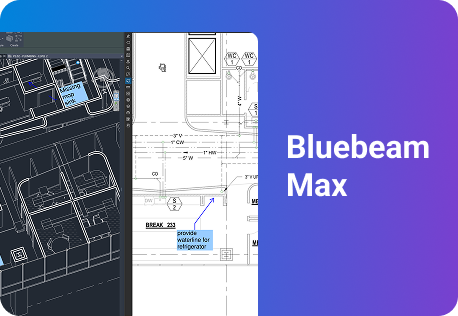
With Bluebeam, estimators now perform precise measurements directly within PDFs, including curved walls and non-standard geometries. Quantity data can be exported or linked to Excel, eliminating manual re-entry and significantly reducing the risk of errors. Bluebeam’s markup tools and automatic legends also help standardise how scope of work is communicated, making drawings easier to understand for both internal teams and customers.
“For document analysis and quantity takeoffs, Bluebeam is fundamental for us. We wouldn’t know how to work without it,” said Luigi Lorenzon Lavezzo, chief operating officer at ADOTTA.
Bluebeam is used daily across ADOTTA’s estimating workflow. Teams receive project documentation, set drawing scales, complete takeoffs and generate marked-up drawings that accompany bids. These same files are also used internally to support coordination between estimating, production and delivery teams.
As a result, ADOTTA has improved the efficiency of its estimating operation, allowing the team to handle more bids without adding headcount. Reducing manual transcription has improved confidence in quantity takeoffs, while clearer documentation has strengthened collaboration across teams and with customers.
Looking ahead, ADOTTA plans to further streamline estimating by expanding use of Quantity Link to connect Bluebeam and Excel in real time. The company is also exploring broader use of Bluebeam in the field and evaluating how emerging AI tools could support analysis of complex specifications and contracts.