





Preserving What Worked, Improving What Didn’t
Huitt-Zollars’ QC process wasn’t broken, but it needed to evolve. For years, teams followed the familiar rhythm of red, yellow, blue and green markups. Each colour represented a step in the process – review, edit, verify, sign off. Some offices even added purple for a final validation check.
“We had a lot of inefficiencies with different offices doing different things”, said Wendy Amann, the firm’s quality director. “It just wasn’t consistent.”
“The logic behind it was really solid”, added Kelvin Wiese, a senior project designer. “But how people were executing that process varied too much. There was no audit trail. No accountability across offices.”
With support from leadership and IT, Amann and Wiese began rolling out a more structured approach. In 2024, Wiese piloted toolsets and workflows with a smaller group of drafters, refining the tools before scaling to the firm.
“I didn’t want to throw people into the deep end”, Amann said. “We did a lot of behind-the-scenes testing first. We weren’t rewriting the book – we were improving it.”
Even though Bluebeam was available firmwide, few teams were taking advantage of its full capabilities – features like Studio Sessions, comment statuses and audit trails. That inconsistency led to missed markups, duplicate effort and a lack of visibility into how design reviews were progressing.
“We knew people were doing things the right way”, Amann said. “But they hadn’t communicated it to anybody else.”
A New Kind of Rollout
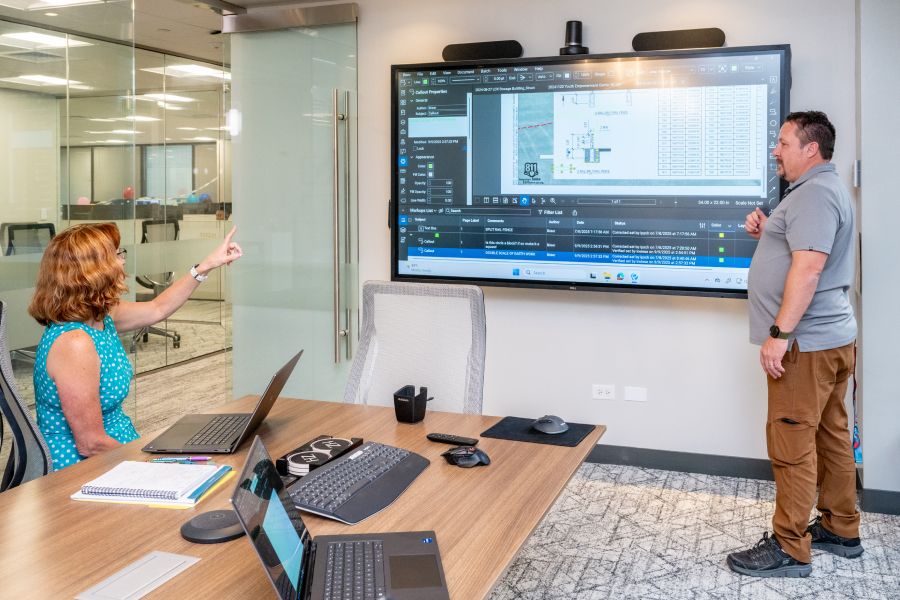
Rather than push an all-at-once transformation, the team took a layered, collaborative approach. First, they developed a shared QC Studio profile, complete with colour-coded statuses, a JavaScript-enabled stamp and markup toolsets that aligned with each QC step. They then created tip sheets showing each step of the process in both paper and digital formats, mirroring the logic for every user type.
“We wanted the stuff done by hand and the stuff done in Adobe and the stuff done in Bluebeam to be consistent in our documentation”, Amann said. “That was non-negotiable.”
Among the other changes:
- Reviews now launched in Bluebeam Studio Sessions for real-time collaboration across offices.
- Roles and responsibilities stayed intact – but all comments now lived in a single document, with timestamps and audit trails.
- A custom digital stamp replaced physical sign-offs.
- Tools, statuses and profiles were standardised and supported by templates and tip sheets for both digital-first and hybrid workflows.
“About 20% of our team still prefers to mark up by hand,” Amann said. “That’s fine – as long as the final record is digital and archived consistently.”
They also learned from early stumbles. A firmwide webinar introducing the new process didn’t land as planned.
“We probably should’ve done a better job with time zone-friendly training sessions”, Wiese admitted. “But we received feedback immediately – not complaints, but requests for tweaks. That told us they were using it.”
QC in Action: A Step-by-Step Walkthrough
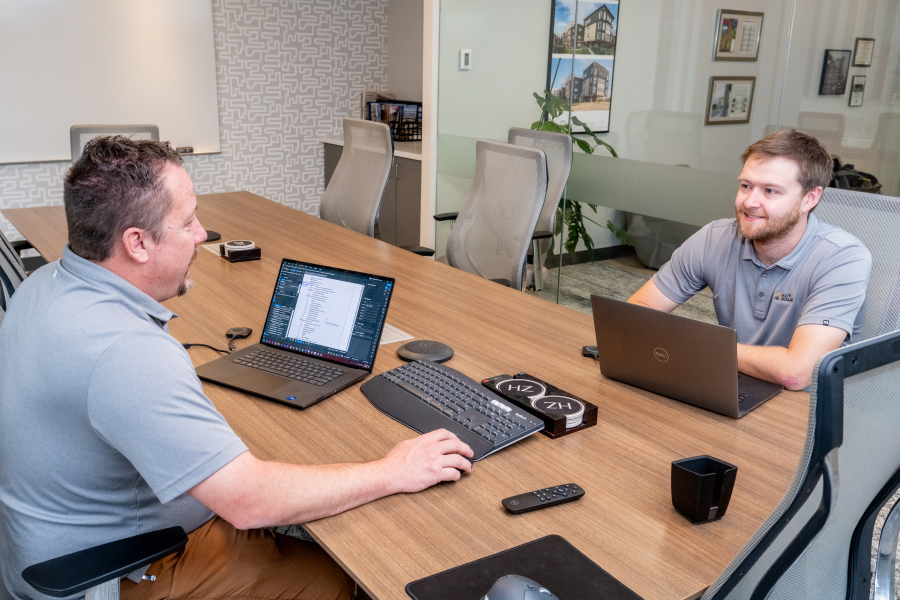
Today, a typical project review at Huitt-Zollars looks like this:
- The project or quality manager launches a Studio Session and invites the team.
- Reviewers add red markups.
- Project manager and reviewers validate by checking that changes align with markups, tagging their blue notations. Invalid comments are noted in purple.
- Designers respond and revise drawings using yellow to indicate when the comments are picked up.
- A verifier completes a final quality check using green.
Each comment is tracked. Each markup status updated. And each participant can see what happened, when and why.
“You can see who made each comment, when they did it and what response was made”, Wiese said. “That alone has eliminated so much back and forth.”
In one example, Wiese used Bluebeam’s Compare Documents feature to overlay two versions of a drawing – his comments versus the revised file. “I caught a markup that had been missed during revisions,” he said. “If I hadn’t overlaid them, we might not have seen it until it was too late.” This was part of the verification process.
Better Reviews, Smarter Collaboration
The transition to digital didn’t just make the process faster. It made it smarter. Bluebeam’s features, once underused, are now essential to the way the firm communicates and collaborates.
“That comment log is just invaluable”, Amann said. “It’s a significant game changer for client correspondence and internal tracking.”
For new hires and junior staff, the change has also been empowering. With a consistent system, onboarding is faster – and expectations are clearer. “People are feeling more comfortable doing the quality review”, Amann said. “We’re embracing technology and meeting them in their space.”
The ability to share workflows across offices has also opened new channels for peer review, especially in hybrid or remote setups. “We’ve gone from ‘here’s a tool’ to ‘here’s a workflow you can rely on’”, Wiese said.
A Cultural Shift, Not Just a Technical One
“You can see who made each comment, when they did it and what response was made. That alone has eliminated so much back and forth.”
Kelvin Wiese,
Senior Project Designer,
Huitt-Zollars
What made the rollout successful wasn’t just the technology. It was the mindset.
“We didn’t come in saying, ‘You have to do it this way’”, Amann said. “We said, ‘Here’s how we can make it easier – and still let you do your job.’”
That message resonated across teams. “It wasn’t that our quality was poor”, Amann said. “It’s that we weren’t consistent. This helped us raise the floor for everybody.”
The firm’s IT team also played a key role in smoothing the transition, helping centralise profile deployment and coordinate user permissions.
Wiese noted that the shift to Studio Sessions encouraged more proactive teamwork. “When you have three people reviewing the same document in real time, there’s just no ambiguity. We’re talking the same language.”
Looking Ahead
While the firm hasn’t tied the transition to hard metrics, the impact is visible. Reviews run smoother. Rework is down. And designers are more confident in how they engage with QC.
“In the past, we’d have someone say, ‘I thought you fixed that’”, Amann said. “Now, there’s a record. No confusion.”
Looking forward, Amann and Wiese are continuing to refine the process – adding refinements to the stamp, standardising title block templates and reinforcing validation steps across disciplines.
“We’re better”, Amann said. “Our documents are better. Our teams feel more confident. That’s the win.”
Advice for Other Firms
For others considering a similar transformation, Huitt-Zollars has a few key takeaways:
- “Don’t reinvent the wheel – just document it better.”
- “You need someone who knows the tools and someone who knows the people.”
- “Meet people where they are. Digital doesn’t have to mean zero paper.”
- “It’s never done. But every step toward clarity makes a difference.”
And most importantly:
“Progress, not perfection”, Amann said. “That’s how you build something that works – for everyone.”